The Withings Sleep Analyzer review starts with one simple truth: most people have no idea how well they actually sleep. It’s like trying to diagnose an engine problem by listening to it in the dark—you’ll catch the noise but miss the cause. This device promises to shed light on your nightly rest, translating every snore, pause, and movement into data you can finally understand.
The Withings sleep analyzer, which tracks sleep cycles and breathing patterns under your mattress, has become one of the top-rated tools in home sleep monitoring. According to recent consumer reports, nearly 70 million Americans struggle with some form of sleep disorder, making accurate, contactless monitoring more relevant than ever. It’s not just about numbers—it’s about understanding patterns that actually affect your daily performance.
After all, when you wake up tired despite eight hours in bed, something’s off. Maybe it’s poor sleep quality, disrupted breathing, or irregular REM cycles—issues the analyzer can flag before they escalate. So before diving into the deeper analysis, let’s look at what this sleek piece of tech really reveals about your nights.
How It Works
The Sleep Analyzer uses a method called ballistocardiography (BCG)—a fancy term meaning it tracks the tiny vibrations your body creates when your heart beats and when you breathe. This information, combined with acoustic sensors, lets the mat detect subtle differences in your breathing pattern and snoring intensity.
Health Support: This Vitamin K2 + D3 Complex is essential for bone density, cardiovascular health, and immune function. It’s a highly-rated formula for those looking to maintain optimal nutrient levels. You can find it on Amazon.
In simple terms: imagine a glass of water placed on a table. Each heartbeat makes a faint ripple, each breath creates a wave. The Sleep Analyzer senses those ripples beneath your mattress and decodes them into medical-grade sleep data.
During the night, it identifies your sleep stages (light, deep, and REM), monitors heart and respiratory rates, and notes when you snore or stop breathing briefly. All of this is automatically logged and displayed in the Health Mate app when you wake up.
Sleep Apnea Detection
The standout feature that separates the Sleep Analyzer from most other trackers is its ability to detect sleep apnea, a condition where breathing repeatedly stops and starts during sleep. Unlike wearables, the Analyzer does this without any contact sensors or nasal cannulas.
It estimates the apnea-hypopnea index (AHI) by analyzing breathing irregularities and sound patterns. Clinical studies have confirmed its accuracy for identifying moderate to severe OSA (AHI ≥15) compared to standard polysomnography (PSG). ⧉
Health Support: This high-absorption Magnesium Glycinate (200 mg) is gentle on the stomach and supports muscle relaxation, better sleep, and metabolic health. You can find this trusted formula on Amazon.
For users in the United States, the consumer version of this product (sold as Withings Sleep) tracks sleep and snoring but does not include apnea diagnostics due to FDA regulations. The Sleep Analyzer model with apnea detection is available in Europe and most other regions. Still, the underlying hardware and sensing technology are the same.
Clinical Validation
Research published in peer-reviewed journals confirms that Withings Sleep Analyzer provides clinically relevant results for home sleep analysis.
- A 2021 study in Journal of Clinical Sleep Medicine found that the Sleep Analyzer could accurately identify individuals with moderate to severe sleep apnea compared to PSG. ⧉
- A 2022 evaluation in Journal of Sleep Research reported 83% accuracy for distinguishing sleep vs. wake, with high sensitivity for detecting sleep phases. ⧉
Accuracy ratings position it among the best contactless consumer sleep devices, rivaling clinical home test kits for early apnea screening.
Table — Validation Overview
| Study / Source | Method & Population | Key Findings |
|---|---|---|
| J Clin Sleep Med 2021 | Analyzer vs PSG in adults with suspected OSA | Accurate detection of moderate–severe apnea (AHI ≥15) |
| J Sleep Res 2022 | Analyzer vs PSG/actigraphy | ~83% sleep–wake accuracy; strong sensitivity for sleep |
| Media & tech reviews | Consumer usability | Reliable staging trends; excellent comfort and automation |
Setup & Daily Use
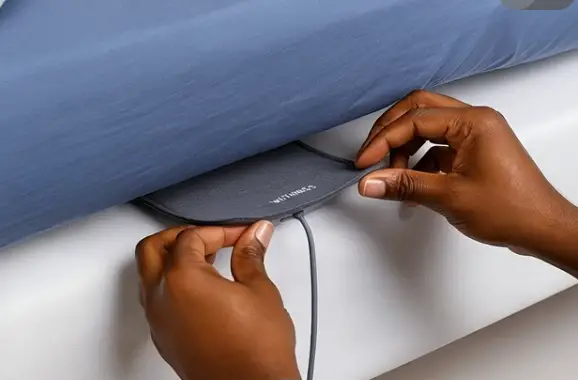
Setup takes about five minutes. Place the mat under your mattress at chest level, plug it in, and connect it to Wi-Fi through the Health Mate app. After one calibration night, it automatically starts tracking whenever you lie down.
The device works best with standard mattresses up to 15 inches (≈38 cm) thick. Extremely soft or very thick beds may slightly reduce signal strength, though repositioning usually solves the issue. The pad remains invisible and doesn’t affect comfort.
Each morning, your results sync automatically: sleep duration, deep and REM stages, snoring duration, heart rate, breathing patterns, and any apnea-related events (where supported). You’ll get a Sleep Score summarizing your night’s quality and detailed graphs to identify trends.
Real-World Feedback
User feedback across forums and retailers consistently praises the hands-off convenience and accuracy of nightly tracking.
Positive feedback highlights:
- “Set it and forget it” ease — no charging, no wristbands.
- Reliable detection of sleep and wake times.
- Detailed snoring and breathing-disturbance tracking.
Common critiques:
- Occasionally marks quiet wakefulness as sleep.
- Sleep stages should be viewed as trend indicators, not clinical classifications.
- Thick or soft mattresses can blunt signals.
As one Reddit user summarized: “It’s the most consistent sleep tracker I’ve tried—sometimes too optimistic, but the trends are spot-on.” ⧉
Comparison with Similar Devices
While Withings Sleep Analyzer dominates the non-wearable category, it’s often compared to popular wearables like the Oura Ring or Apple Watch. The main advantage is comfort: you never have to remember to wear or charge it.
Table — How It Compares
| Device & Type | Key Features (Apnea, Comfort) | Best For |
|---|---|---|
| Withings Sleep Analyzer (Under-mattress) | Clinical-grade apnea detection; fully contactless | Anyone seeking effortless nightly tracking |
| Oura Ring (Gen 3) (Wearable) | No apnea detection; stylish, continuous HR/SpO₂ | Users who prefer elegant, wearable sensors |
| Apple Watch Series 9 (Wearable) | No apnea detection; deep integration with Apple Health | Fitness-oriented users tracking activity and sleep |
| Garmin Venu 3 (Wearable) | No apnea detection; HRV and recovery data | Athletes focusing on training recovery |
Pros & Cons
Pros:
- Fully automatic and contactless — no wearable needed.
- Clinically validated apnea detection (outside U.S.).
- Provides detailed nightly reports with actionable insights.
- Integrates seamlessly with other Withings health products.
Cons:
- Sleep staging is an estimate (no EEG data).
- In the U.S., apnea detection feature is unavailable.
- Works best with standard-thickness mattresses (<15 in / 38 cm).
Editorial Advice
Reyus Mammadli, medical consultant, recommends: “For adults who snore or suspect sleep apnea but dislike wearing devices, the Withings Sleep Analyzer offers a comfortable first step. It’s an excellent screening tool—but persistent symptoms or high AHI estimates should always prompt a clinical evaluation.”
From an editorial standpoint, this device bridges the gap between medical sleep studies and everyday wellness technology. It delivers practical, nightly data without the hassle of cables or sensors, making it one of the most user-friendly tools in modern home sleep tracking.
Bottom line: The Withings Sleep Analyzer isn’t just another sleep gadget—it’s a quiet, intelligent observer that turns your bed into a personalized sleep lab.
Sources: J Clin Sleep Med 2021; J Sleep Res 2022; Withings official data; Sleep Foundation; Reddit user feedback; The Verge tech review. ⧉ ⧉ ⧉ ⧉ ⧉