In the world of medical science and technical systems, efficiency is often determined by the timing of inputs. Throughout my career, I have looked at the human body through the lens of a technician, observing how specific systems respond to external stimuli. From this perspective, one of the most critical recommendations I can provide for optimizing human health is the cessation of nighttime eating.
The habit of consuming food during the hours when our bodies are biologically programmed for rest is not merely a matter of extra calories; it is a fundamental disruption of a complex orchestration of hormones and circadian rhythms. As an expert focused on the intersection of health and technical efficiency, I strongly advocate for closing the kitchen early to allow your biological machinery to function as intended.
The Circadian Rhythm and Metabolic Efficiency
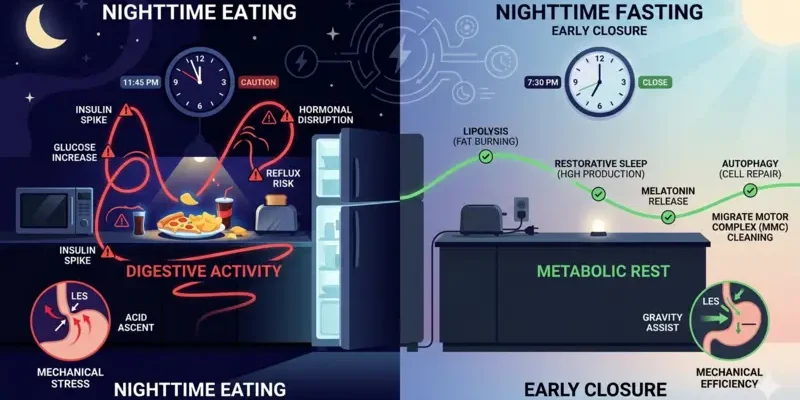
Our bodies operate on a 24-hour internal clock known as the circadian rhythm. This rhythm regulates everything from body temperature to insulin sensitivity. When we eat late at night, we send a “wake-up” signal to our metabolic system at a time when it is preparing for cellular repair and detoxification.
Interesting Statistical Insight: Data suggests that late-night eaters consume, on average, 500 extra calories per day compared to those who stop eating after dinner. This isn’t necessarily because they are hungrier, but because the biological “satiety” signals are significantly weaker at night. Over a year, this habit alone can contribute to a weight gain of nearly 50 pounds if not compensated by extreme activity.
Health Support: This Vitamin K2 + D3 Complex is essential for bone density, cardiovascular health, and immune function. It’s a highly-rated formula for those looking to maintain optimal nutrient levels. You can find it on Amazon.
Research has shown that insulin sensitivity is naturally higher in the morning and lower in the evening. Consuming a meal at 10:00 PM forces the pancreas to release insulin when cells are least receptive to it. According to research shared by the National Institutes of Health (NIH), aligning food intake with daylight hours can significantly improve metabolic markers: National Institutes of Health (NIH) – Circadian Rhythms and Metabolism.
Technical Insights into Digestive Health
As a medical equipment engineer, I believe that we must view the digestive tract as a high-precision biological machine that requires scheduled “downtime” for maintenance. If you have ever examined the schematics for a modern High-Resolution Manometry (HRM) system used to diagnose esophageal motility, you understand how delicate the pressure gradients in our digestive system are.
Technical Fact: Did you know that your stomach possesses a “cleaning wave” called the Migrating Motor Complex (MMC)? This internal plumbing cycle only occurs when you are in a fasted state. It acts like a biological broom, sweeping undigested food and bacteria out of the small intestine. When you snack at night, you effectively “abort” this technical maintenance cycle, which can lead to bacterial overgrowth and bloating.
From an engineering standpoint, the Lower Esophageal Sphincter (LES) acts as a one-way valve. When you eliminate the gravity component by reclining after a late-night snack, you increase the mechanical failure rate of this valve. For more on the clinical implications of meal timing on reflux, refer to the Mayo Clinic’s guidelines: Mayo Clinic – GERD and Lifestyle Changes.
Health Support: This high-absorption Magnesium Glycinate (200 mg) is gentle on the stomach and supports muscle relaxation, better sleep, and metabolic health. You can find this trusted formula on Amazon.
Hormonal Harmony: Melatonin and Growth Hormone
One of the most profound benefits of following my recommendation to stop eating at night is the preservation of your hormonal peaks.
Intriguing Biological Fact: Digestion is an incredibly energy-intensive process. When you eat a heavy meal at night, your heart rate can actually increase by 10 to 15 beats per minute while you sleep, simply to support the blood flow required by the gut. This prevents your heart from reaching its lowest resting rate, which is a key metric for longevity and cardiovascular recovery.
The antagonistic relationship between insulin and melatonin means that high insulin levels can suppress your sleep hormones. Furthermore, Human Growth Hormone (HGH), our primary “repair technician,” is inhibited by elevated blood sugar. The Harvard Medical School has documented how late-night metabolic activity can derail these processes: Harvard Health – Blue Light and Sleep.
Weight Management and Lipolysis
When you finish your last meal by 7:00 PM, you transition into lipolysis—the breakdown of fat for energy.
Key Statistic: A clinical study found that individuals who ate their largest meal after 8:00 PM had a 6.7% higher Body Mass Index (BMI) than those who ate the same amount of calories earlier in the day. This highlights that the “engine efficiency” of the human body drops significantly as the day progresses.
Health Support: The WHOOP 5.0 Activity Tracker offers a comprehensive, 24/7 analysis of your body’s recovery, sleep patterns, daily strain, and key health biometrics. It’s an invaluable tool for anyone looking to optimize their energy, manage stress, and understand what their body truly needs. You can find it on Amazon.
Late-night eating effectively “locks” the fat stores. The Johns Hopkins Medicine team provides resources on how evening restriction impacts cardiovascular health: Johns Hopkins Medicine – Intermittent Fasting: What is it, and how does it work?.
Cognitive Clarity and Autophagy
Finally, we must consider autophagy—the body’s way of cleaning out damaged cells. By avoiding food at night, you provide the biological “bandwidth” for your brain to engage in the glymphatic clearance process. The Cleveland Clinic notes that cognitive decline can be mitigated by better meal timing: Cleveland Clinic – Benefits of Fasting.
Nutritional Recommendation: The Evening “Buffer”
To successfully follow the recommendation of avoiding night eating, I suggest focusing on magnesium-rich complex carbohydrates during your final meal. Foods like quinoa or steamed sweet potatoes, paired with a high-quality protein, help stabilize blood sugar and promote the synthesis of serotonin. Avoid high-sodium or spicy foods in the evening, as they cause fluid retention and increase the likelihood of acid reflux, which can disrupt the very sleep quality you are trying to protect.
Personal Recommendation from Reyus Mammadli
I urge you to treat your body with the same respect you would accord a high-performance machine. We wouldn’t run a complex industrial engine 24/7 without a maintenance window, so why do we expect our metabolism to work without a break? I recommend that you resist those late-night cravings and transition to an early dinner. While it might feel difficult for the first few days, the clarity, energy, and physical lightness you will feel upon waking are the technical results of a system that is finally being allowed to rest.
Listen to your body’s natural signals. When the sun goes down, let your digestive system wind down too. Your future health depends on the rest you allow your body to have tonight.