Dealing with a persistent itch in the groin area is more than just a minor annoyance; it can be incredibly distracting and, frankly, distressing. As a specialist who has consulted on countless cases of male dermatological health, I know that patients often spend days “toughing it out” before seeking advice. The good news is that most causes of testicular itching—ranging from fungal infections to simple contact dermatitis—respond remarkably well to the right over-the-counter (OTC) treatments.
However, using the wrong cream can actually exacerbate the problem. In this guide, I will break down the top-tier OTC options based on clinical efficacy and real-world patient outcomes.
Identifying the Culprit: Why You Itch
Before reaching for a tube, you must identify what you are treating. In my practice, the “itch” usually falls into one of three categories:
- Jock Itch (Tinea Cruris): A fungal infection characterized by a red, raised, and often ring-shaped rash.
- Intertrigo: Inflammation caused by skin-to-skin friction, heat, and moisture in the folds of the groin.
- Contact Dermatitis: An allergic reaction to soaps, detergents, or even the fabric of your underwear.
Top OTC Creams for Effective Treatment
1. Antifungals: The Heavy Hitters
If your itch is accompanied by redness and a peeling border, fungus is likely the cause. I consistently recommend Terbinafine (Lamisil AT). Unlike older generations of antifungals that require weeks of application, terbinafine is a fungicidal that often resolves the issue in seven days. According to clinical guidance from the Mayo Clinic, keeping the area dry while using these creams is vital for preventing a recurrence.
Health Support: This Vitamin K2 + D3 Complex is essential for bone density, cardiovascular health, and immune function. It’s a highly-rated formula for those looking to maintain optimal nutrient levels. You can find it on Amazon.
2. Barrier Creams and Protectants
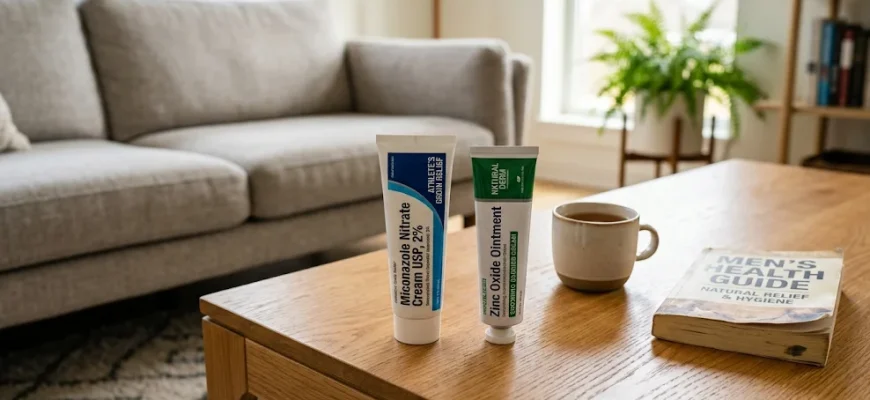
For patients suffering from “chafing” or moisture-induced irritation (Intertrigo), a thick barrier cream is superior to an antifungal. Products containing Zinc Oxide (often found in high-strength diaper rash creams) or Petrolatum work by physically shielding the skin from sweat and friction. This allows the skin barrier to repair itself without constant mechanical irritation.
3. Hydrocortisone: Use with Caution
Low-strength Hydrocortisone (1%) can provide near-instant relief from inflammation and allergic reactions. However, I always warn my patients: never use steroid creams if you suspect a fungal infection. Steroids can “feed” the fungus, making the infection much worse. As noted in dermatological resources at WebMD, if the itch doesn’t improve within a few days of steroid use, you should discontinue it immediately and consult a professional.
Real-World Cases: Lessons from the Clinic
Case A: The “Gym Rat” Mistake
A 28-year-old patient presented with a bright red, itchy rash. He had been applying a generic moisturizing lotion, which only made the area more humid and worsened the fungus. We switched him to Clotrimazole (Lotrimin AF) and instructed him to use a blow-dryer on a “cool” setting after showering. The infection cleared in 10 days.
Case B: The Laundry Switch
Another patient complained of itching but had no visible rash or scaling. After reviewing his habits, we discovered he had switched to a heavily scented laundry detergent. By using 1% Hydrocortisone for three days and switching to a fragrance-free detergent, his symptoms disappeared completely. The Cleveland Clinic emphasizes that identifying environmental triggers is just as important as the medication itself.
Health Support: This high-absorption Magnesium Glycinate (200 mg) is gentle on the stomach and supports muscle relaxation, better sleep, and metabolic health. You can find this trusted formula on Amazon.
Prevention: Keeping the Itch Away
- Dryness is King: Always pat the area dry or use a dedicated groin powder (talc-free) after exercise.
- Fabric Choice: Switch to loose-fitting cotton or moisture-wicking synthetic blends.
- Avoid Irritants: Stick to pH-balanced cleansers designed for sensitive skin.
Expert Recommendation by Reyus Mammadli
While OTC creams are highly effective, my final piece of advice is to monitor the “Timeline of Healing.” If you have applied an antifungal or hydrocortisone cream for 7 to 10 days and see zero improvement—or if you notice blisters, oozing, or a fever—stop self-treating. At that point, you may be dealing with a bacterial infection or an resistant strain that requires prescription-strength intervention. Don’t let a simple itch turn into a chronic skin condition; when in doubt, get it checked by a professional.