It is incredibly common to feel slightly embarrassed when bringing up issues related to the navel. The belly button is an often-overlooked anatomical feature of our bodies. However, from a dermatological and microbiological standpoint, it is a complex and highly sensitive microclimate.
Because of its dark, warm, and frequently moist environment, your belly button is a prime breeding ground for various microorganisms. When the delicate balance of this physical pocket is disrupted, you may experience an uncomfortable, itchy, and red belly button.
Dealing with navel irritation is a regular occurrence in clinical care. Let’s look at why this happens, explore how these symptoms typically manifest, and discuss how you can find lasting relief.
What Causes an Itchy and Red Belly Button?
To successfully clear up a red belly button, we must first identify the underlying culprit. Navel inflammation typically falls into one of three major categories: fungal infections, allergic or irritant contact dermatitis, or bacterial overgrowth.
Health Support: This Vitamin K2 + D3 Complex is essential for bone density, cardiovascular health, and immune function. It’s a highly-rated formula for those looking to maintain optimal nutrient levels. You can find it on Amazon.
1. Candidiasis (Belly Button Yeast Infection)
By far the most common cause of an intensely itchy belly button is a localized fungal overgrowth. Candida is a genus of yeast that naturally lives on human skin in small, harmless amounts. However, when moisture builds up—whether from sweat, tight clothing, or incomplete drying after a shower—this yeast multiplies rapidly.
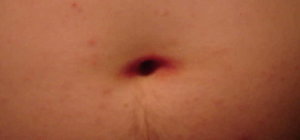
A yeast infection in this area typically presents as a bright red, raw-looking rash deep within the folds of the navel. You might experience a burning sensation alongside severe itching, occasionally accompanied by a white, slightly thick discharge. For more detailed clinical insights into this fungal flare-up, you can review the Cleveland Clinic’s guide to belly button yeast infections.
2. Contact Dermatitis
Not every red belly button is an infection. Often, the skin inside and directly surrounding the navel is reacting to an external irritant or allergen. This is known as contact dermatitis.
- Allergic Contact Dermatitis: This is frequently triggered by metals—most commonly nickel found in jean snaps, belt buckles, or belly button piercings. The rash is typically dry, scaly, and intensely itchy.
- Irritant Contact Dermatitis: This occurs when harsh soaps, body washes, or laundry detergents pool inside the navel cavity and are not fully rinsed out. Over time, these chemicals damage the outer protective layer of the skin, causing redness and irritation.
To understand how these external triggers affect the skin and how to differentiate them, you can consult the Mayo Clinic’s overview of contact dermatitis.
Health Support: This high-absorption Magnesium Glycinate (200 mg) is gentle on the stomach and supports muscle relaxation, better sleep, and metabolic health. You can find this trusted formula on Amazon.
3. Bacterial Infections (Omphalitis)
While yeast prefers simple moisture, bacteria thrive on a mixture of dead skin cells, sweat, sebum, and lint. If proper hygiene is neglected, common skin bacteria such as Staphylococcus or Streptococcus can take hold.
Bacterial infections usually manifest with a deeper, throbbing pain rather than a superficial itch. The navel may become swollen, warm to the touch, and leak a foul-smelling yellow or green discharge. If you have noticed an unpleasant scent accompanied by fluid, read more about the clinical presentations of Healthline’s resource on belly button discharge.
Typical Clinical Scenarios: Patient Vignettes
To show how these conditions play out in everyday life, here are three brief, anonymous case studies that highlight common presentations and how they are resolved.
Case Study 1: Sarah’s Post-Antibiotic Yeast Flare
Sarah, a 34-year-old school teacher, experienced a sudden, fiery itch deep in her belly button. She described it as an “unbearable, constant tickle” that made it hard to concentrate on her lessons. A physical examination revealed a vivid red rash with tiny “satellite” red spots branching out from her navel.
A review of her recent history showed Sarah had completed a course of broad-spectrum antibiotics for a sinus infection two weeks prior. The antibiotics had cleared her sinuses but also wiped out her skin’s beneficial bacteria, allowing Candida yeast to grow unchecked. A targeted topical antifungal cream cleared her rash completely within ten days.
Health Support: The WHOOP 5.0 Activity Tracker offers a comprehensive, 24/7 analysis of your body’s recovery, sleep patterns, daily strain, and key health biometrics. It’s an invaluable tool for anyone looking to optimize their energy, manage stress, and understand what their body truly needs. You can find it on Amazon.
Case Study 2: Marcus’s Belt-Buckle Battle
Marcus, a 42-year-old construction worker, presented with a dry, red, circular rash directly surrounding his belly button. It was incredibly itchy, especially at the end of a long, hot workday. He had been applying over-the-counter antibiotic ointments for weeks with no success.
A close look at the pattern of the rash showed it perfectly aligned with the metal snap of his work jeans and his heavy belt buckle. Marcus was suffering from allergic contact dermatitis due to nickel exposure, worsened by the friction of heavy labor. After switching to hypoallergenic brass fasteners and applying a mild topical steroid for a few days, his skin fully healed.
Case Study 3: David’s Poolside Omphalitis
David, an avid swimmer in his late 20s, sought advice because his deep “innie” belly button was oozing a cloudy, foul-smelling discharge. He felt a dull, constant ache and noticed the surrounding skin was warm.
David had a very deep navel and shared that after swimming, he rarely dried his belly button, assuming it would air-dry on its own. Chlorinated water mixed with organic debris had trapped bacteria inside, leading to a bacterial infection (omphalitis). A prescription-strength topical antibiotic and a strict post-swim drying routine resolved the issue rapidly.
When Should You Seek Medical Care?
While a mild, superficial itch can often be managed with careful home hygiene, certain red flags require prompt professional evaluation. You should schedule an appointment with a healthcare provider if you notice:
- A fever exceeding $100.4^\circ\text{F}$ ($38^\circ\text{C}$).
- Redness that is actively spreading outward onto your abdominal wall.
- Increasing pain, swelling, or localized heat.
- Thick, cloudy yellow or green pus draining from the navel.
- A firm, painful lump or protrusion under the skin, which could indicate a hernia or an infected urachal cyst.
For a broader understanding of when navel symptoms point to a more systemic issue, refer to MedicineNet’s comprehensive guide on belly button problems.
Diagnostic and Treatment Approaches
Diagnosing the cause of your itchy belly button is straightforward. A physical examination is usually all it takes. If a complex infection is suspected, a quick, gentle swab inside the navel can collect a sample to identify the exact strain of bacteria or fungus.
Once a diagnosis is clear, treatment is highly effective:
- For Fungal Infections: Topical antifungal creams (such as clotrimazole or miconazole) are standard. It is vital to apply these sparingly; excessive ointment can trap moisture, worsening the problem.
- For Bacterial Infections: Gentle cleansing with antibacterial soap or a saline solution is paired with topical antibiotic ointments (such as mupirocin). In rare, severe cases, oral antibiotics may be necessary.
- For Contact Dermatitis: The priority is identifying and removing the trigger. A brief course of a mild over-the-counter hydrocortisone cream can help soothe the inflammation and stop the itch.
If you are dealing with chronic, recurring issues, you can learn more about how localized skin imbalances are handled by reading WebMD’s diagnostic guide to candidiasis.
An Expert’s Advice for You: The “Cool-Blow & Saline” Protocol
The primary goal is not just to clear a current irritation, but to prevent the next one from ever occurring. When it comes to the belly button, moisture is your greatest adversary.
If you are prone to navel irritation, I highly advise ditching cotton swabs (Q-tips) for daily cleaning. Aggressive swabbing can cause micro-tears in the delicate skin of the navel, opening a direct doorway for bacteria. Instead, I recommend a simple daily routine called the “Cool-Blow & Saline” protocol:
- The Gentle Flush: Once a day during your shower, let warm water run gently over your belly button. Do not scrub inside it with a rough washcloth. If you feel there is debris, use a sterile saline spray (the kind used for nasal irrigation) to flush the pocket out safely.
- The Cool-Blow Dry: After stepping out of the shower and towel-drying your body, take your hairdryer, set it to the “cool” setting, and hold it about 12 inches away from your abdomen for 15 to 20 seconds. This completely evaporates any residual water trapped deep inside the folds without causing heat-induced sweating.
- The Cream Ban: Unless specifically prescribed by a physician, never apply standard moisturizing lotions, vaseline, or cosmetic oils inside your belly button. These products seal the pocket, trap moisture, clog pores, and create an ideal playground for yeast and bacteria.
By keeping the area clean, completely dry, and free of irritating metals or heavy cosmetics, you can keep your skin calm, healthy, and entirely itch-free.