Selecting the right moisturizer is often the most underrated step in a skincare routine. Most people pick a jar based on an attractive scent or a trending brand, but as someone who has navigated the complexities of dermatological health for years, I can tell you that your skin deserves a much more scientific approach. A moisturizer isn’t just a “feel-good” lotion; it is a functional barrier that protects your largest organ from environmental stressors and transepidermal water loss.
In this guide, I will break down the essential components of an effective moisturizing cream, providing you with the tools to look past the marketing jargon and understand what your skin truly needs.
Understanding the Three Pillars of Hydration
When I evaluate a moisturizing cream, I don’t look for “magic” ingredients. Instead, I look for a balance of three specific types of components: humectants, emollients, and occlusives.
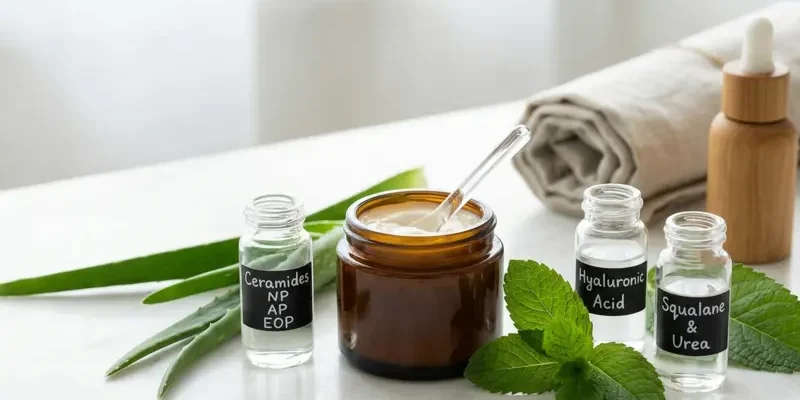
Humectants like hyaluronic acid and glycerin draw water into the skin. Emollients such as ceramides and squalane fill the gaps between skin cells to smooth the surface. Finally, occlusives like petrolatum or dimethicone lock everything in. In my experience, the “hidden flaw” of many luxury creams is an over-reliance on emollients for a silky feel, while neglecting the occlusives necessary to prevent moisture from evaporating within an hour.
Interesting Fact #1: Did you know that the skin is the only organ that can absorb water directly from the atmosphere? Humectants facilitate this process, but only if the ambient humidity is above 70%.
The Role of Ceramides and the Skin Barrier
One of the most critical elements to look for is ceramides. These are lipid molecules found naturally in high concentrations within cell membranes. They make up about 50% of the lipids in the skin barrier.
I firmly believe that if a moisturizer for dry or aging skin doesn’t contain at least three types of ceramides (usually labeled as Ceramide NP, AP, or EOP), it is incomplete. The nuance here is that while many products claim to “repair” the barrier, without the correct lipid ratio, they only provide a temporary masking effect. An alternative for those who find synthetic ceramides too heavy is phytosphingosine, a lipid precursor that encourages the skin to produce its own ceramides.
- Statistic #1: According to the American Academy of Dermatology (AAD), approximately 50% of the skin’s moisture barrier is composed of ceramides, which is why their depletion leads to visible aging and irritation.
Navigating Ingredients for Specific Skin Types
Choosing a moisturizer is not a “one size fits all” endeavor. Your skin type dictates the “weight” of the product you should choose.
- Oily and Acne-Prone Skin: Look for non-comedogenic formulas. I recommend focusing on “oil-free” gels that utilize dimethicone. While some fear silicones, dimethicone is excellent because it provides a barrier without clogging pores. The downside? It can sometimes feel “plasticky” under makeup.
- Dry and Dehydrated Skin: You need a heavy hitter. Look for urea or lactic acid. These are keratolytic humectants—they hydrate while gently dissolving the dead skin cells that prevent moisture from penetrating.
- Sensitive Skin: Avoid “fragrance” or “parfum” at all costs. Even natural essential oils can trigger contact dermatitis over time.
Interesting Fact #2: Hyaluronic acid can hold up to 1,000 times its weight in water. However, if applied to dry skin in a dry climate without an occlusive over it, it can actually pull moisture out of your deeper skin layers, leaving you drier than before.
The Importance of pH Balance
Our skin has a natural “acid mantle” with a pH typically between 4.5 and 5.5. Many mass-market moisturizers are too alkaline. I always advise looking for products labeled “pH balanced.” A moisturizer that disrupts your pH can lead to an overgrowth of bacteria, contributing to acne or rosacea.
The subtle disadvantage of many “natural” or “homemade” creams is their lack of pH stability. While the idea of “chemical-free” is appealing, lab-formulated products are often much safer for maintaining the skin’s delicate acidic environment.
- Statistic #2: Research published by the National Institutes of Health (NIH) suggests that maintaining a skin pH below 5.0 is associated with lower rates of skin infections and improved barrier function.
Reading the Label: Red Flags and Marketing Myths
We often see “Dermatologist Tested” on labels, but this is a broad term with no legal definition in the U.S. It doesn’t mean the product was approved, just that a dermatologist was present during testing.
When scanning the ingredient list (the INCI list), remember that ingredients are listed in descending order of concentration. If the “active” ingredient like Vitamin C or Retinol is at the very bottom, it’s likely there for marketing purposes rather than efficacy. I personally suggest looking for a “short” ingredient list. The more ingredients a cream has, the higher the statistical probability that one of them will cause an adverse reaction.
- Statistic #3: A study cited by the Cleveland Clinic indicates that nearly 20% of the population has some form of fragrance allergy, making “fragrance-free” a safer bet for the general public.
Interesting Fact #3: The term “Hypoallergenic” is not regulated by the FDA. It simply means the manufacturer believes the product is less likely to cause allergic reactions, but there are no mandatory tests to prove it.
Seasonal Adjustments and Application Techniques
Your moisturizer should change with the seasons. In the winter, I advocate for an “ointment-to-cream” ratio that favors occlusives. In the summer, a lightweight lotion is sufficient.
The nuance many miss is when to apply. Applying moisturizer to bone-dry skin is a mistake. For maximum benefit, apply your cream within three minutes of exiting the shower or washing your face. This “damp skin” technique traps existing surface moisture before it can evaporate.
- Statistic #4: According to data from the Journal of Clinical and Aesthetic Dermatology, consistent use of moisturizer can reduce the clinical signs of skin aging by up to 20% by maintaining the plumpness of the stratum corneum.
Interesting Fact #4: “Medical grade” skincare is another marketing term. While these products often have higher concentrations of actives, they are still regulated as cosmetics, not drugs, unless they contain specific ingredients like prescription-strength retinoids.
Personal Recommendation from Reyus Mammadli
When it comes to your skin, complexity is rarely your friend. My personal recommendation is to stop chasing the “all-in-one” miracle jar that promises to hydrate, brighten, tighten, and cure acne simultaneously. These formulations often contain conflicting ingredients that neutralize each other or irritate the skin.
Instead, invest in a minimalist, high-quality barrier repair cream that focuses on the “Golden Trio”: Ceramides, Cholesterol, and Fatty Acids. This physiological lipid mixture mimics your skin’s natural composition. If you need anti-aging or brightening effects, use a separate serum and let your moisturizer do exactly what its name implies—moisturize.
My unique advice to you: Treat your moisturizer like a seal, not a treatment. Use a simple, fragrance-free, ceramide-rich cream and apply it even on the days you feel your skin is “fine.” Consistency builds the barrier; occasional use only patches the holes. Your future self will thank you for the resilience you build today.